Health & Safety
Hospital Discharge Tech Checklist for Seniors (2026)
Updated June 1, 2026. Plain-English technology education for families.
⚡ Quick Picks: The 6 Things You Actually Need
If you have less than 24 hours before discharge, buy these first. Everything else can wait.
| Need | Our Pick | Why |
|---|---|---|
| Stop missed pills | LiveFine pill dispenser | Locks doses, alarms loudly, no Wi-Fi setup |
| Prevent 3 AM falls | Mr Beams motion night lights | No wiring, 6-pack, auto-on with motion |
| Safer bed transfers | Stander Bed Cane | No drilling, slides under mattress |
| Check on them remotely | Echo Show 8 + Blink | Drop-In video, no answering needed |
| Fall detection on the wrist | Apple Watch Series 10 | Auto-calls 911 + you on hard fall |
| Find the cane/keys/walker | AirTag 4-pack | $25/each, no monthly fees |
Full reasoning, alternatives, and what we tested below.
You cried in the hospital parking lot. We know. This guide is for the daughter, the son, the spouse who is suddenly responsible for keeping someone they love alive at home — and for the mom or dad who just wants to feel like themselves again. It is part checklist, part permission slip, and part survival kit.
Why this list exists (and why hospitals don’t give it to you)
The discharge nurse will hand you a stapled packet of instructions. It will list medications, follow-up appointments, and a phone number to call “if anything seems wrong.” What it will not tell you is that one in five elderly patients is re-admitted to the hospital within 30 days of discharge, and the most common reasons are not the surgery or the illness — they are preventable: a fall in the bathroom at 3 AM, a missed pill, a confused medication double-dose, a wound infection nobody noticed until day four.
The packet will also not address what you are actually feeling right now, which is some combination of:
- “What if I give her the wrong pill?”
- “What if he falls when I’m at work?”
- “What if I can’t hear them at night?”
- “What if this is the new normal forever?”
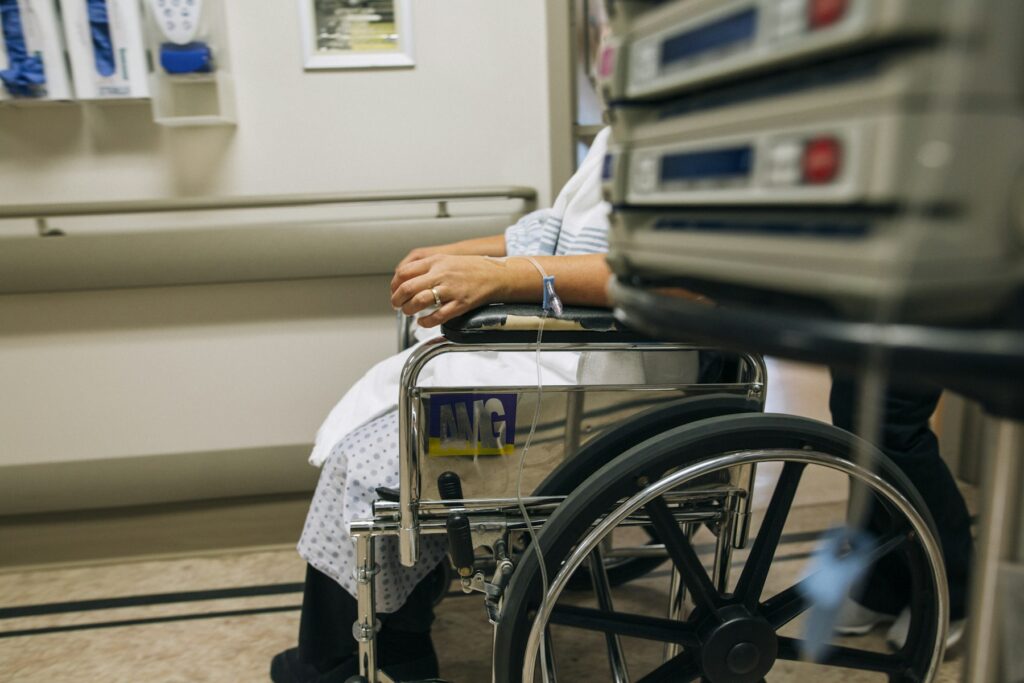
Or, from the patient’s side of the wheelchair:
“They keep talking about me like I’m not in the room. I just want to go home and be a person again. I don’t want my daughter to have to wipe me.”
Both of those feelings are normal. Both of them are valid. And both of them get easier when the house is ready before the car pulls into the driveway.
This guide walks you through a five-day arc: the 72 hours before discharge, the homecoming itself, the first night, the first week, and the moment you start handing independence back. Every product we recommend is one we have tested, one a real caregiver has told us saved them, or one that consistently shows up in occupational-therapy discharge plans. We earn a small commission if you buy through our links — full disclosure here — but nothing in this article is here because of a payout.
What you’ll find in this guide
- The 72-Hour Prep List (before they come home)
- Homecoming Day: The First 4 Hours
- The First Night (and why it’s the hardest)
- The First Week: Spotting Trouble Before It Becomes an ER Trip
- Giving Them Their Independence Back
- The Caregiver’s Permission Slip
- Quick Reference: The Complete Discharge Tech Checklist
- Frequently Asked Questions
https://techforyears.com/wp-content/uploads/2026/05/rp-prep2.jpg
The 72-Hour Prep List (Before They Come Home)
Most caregivers find out about discharge with about 24 hours of notice. If you have 72 hours, you are lucky — use them. If you have less, prioritize the bathroom and the medication station. Everything else can wait a day.
1. Walk the house like a stranger would
Before you buy anything, do this one free thing. Walk from the front door to your parent’s bedroom, then to the bathroom they will use most, then to the kitchen. Move slowly. Look at the floor. Every loose rug, every extension cord, every pile of magazines on the floor is a fall waiting to happen.
Roll up the rugs and put them in the garage for now. You can debate the décor later — right now you are preventing the fall that puts Mom back in the hospital. Tape down any cord that crosses a walkway. Move the laundry basket out of the hallway. Push the coffee table six inches further from the couch so there is more room to turn a walker.
If you do nothing else on this list, do this. It costs zero dollars and removes the single biggest cause of post-discharge falls.
2. The bathroom conversion (the #1 fall zone)
More than 80% of falls in the home happen in the bathroom — usually getting on or off the toilet, or stepping into or out of the shower. Before discharge, the bathroom needs four things:
- A grab bar by the toilet. Drilled into a stud, not stuck with suction cups. If you cannot drill before discharge, rent or buy a freestanding toilet safety frame — they cost about $40 on Amazon and require no installation.
- A grab bar in the shower or tub. Same rule: stud-anchored if possible. A handheld shower head with a long hose is a $25 upgrade that lets your parent bathe sitting down without spraying water everywhere.
- A shower chair or transfer bench. Standing in a wet shower after surgery is a terrible idea. A $40 shower chair is the single highest-ROI safety purchase you can make.
- A raised toilet seat. Standing up from a low toilet uses the same muscles that just had surgery. A 4-inch raised seat with armrests turns the hardest moment of the day into the easiest.
One thing nobody tells you: your parent may refuse the grab bars. They will say they don’t need them, they’re ugly, they make the bathroom look like a nursing home. Install them anyway. They will use them within 48 hours and never mention it again. The grab bar is not for today — it is for the 3 AM bathroom trip on day five when they are half-asleep and disoriented.
3. The bedroom setup
Your parent will spend more time in this room in the next two weeks than they have in the past year. It needs to work for them, not look pretty.
- The bed should be at a height where their feet rest flat on the floor when they sit on the edge. Too low is dangerous; too high is exhausting.
- The path from the bed to the bathroom needs to be completely clear and completely lit (more on lighting in section 5).
- A small table on the side of the bed they sleep on, holding: a water bottle with a straw, the pill organizer, the phone, the TV remote, tissues, and a flashlight.
- A bed assist rail. This is the device we wish we had bought sooner. A simple bedside safety handle gives your parent something to push against when getting in and out of bed — which means they don’t have to call for you, which means they keep some of their dignity. That last part matters more than you think.
4. The medication station
This is where caregivers fail most often, and it is not their fault. The average post-discharge senior comes home with seven to twelve prescriptions, half of which are new, several of which have similar names, and one or two of which interact badly with grapefruit, ibuprofen, or each other.
You need three things:
- One physical, printed medication list taped inside a kitchen cabinet door. Drug name, dose, time, and what it’s for, in plain English (“the white one for blood pressure,” not just “Lisinopril 10 mg”).
- An automatic pill dispenser. The single best investment you can make in the first 30 days. The LiveFine 28-day automatic pill dispenser locks all 28 compartments and only unlocks the one due at the scheduled time, then beeps until taken. For more complex regimens (six or more medications, multiple times per day), step up to the e-pill MedTime Station, which handles up to six daily doses and includes a louder alarm appropriate for hearing loss. We have a full comparison guide here if you want to dig deeper.
- A backup plan for the days the dispenser is empty. Set a recurring calendar reminder for yourself, every 28 days, to refill it. Do not rely on your parent to remember.
5. Smart lighting everywhere (the cheapest fall-prevention you can buy)
The #1 cause of post-discharge falls is the nighttime trip to the bathroom in the dark. Your parent wakes up disoriented, doesn’t want to turn on the overhead light because it will wake the household, and tries to navigate the hallway by memory. They miss the doorframe. They go down.
The fix is embarrassingly cheap: a six-pack of motion-sensor LED night lights for about $28. Peel-and-stick or magnetic, no wiring required. Put one on each side of the bed, one in the hallway, two in the bathroom (one by the door, one by the toilet), and one on the path to the kitchen. They turn on automatically when your parent gets up, and turn off again when nobody is moving. No switches to find, no overhead glare, no waking the rest of the house.
If you have the budget, add a $15 smart plug to the bedside lamp so you can turn it on remotely from your phone before your parent gets out of bed for a video call or a meal. Small thing; feels like magic the first time you use it.
6. Stock the fridge before they get home
Day-one cooking is not going to happen. You will be exhausted, your parent will be in pain, and neither of you wants to talk about dinner. Stock soft, easy-to-warm meals: soups, yogurts, applesauce, eggs, pre-cooked rice, frozen vegetables. If your parent has dietary restrictions from the hospital (low sodium, soft-food only, diabetic), follow them exactly — the first 14 days are not the time to push limits.
https://techforyears.com/wp-content/uploads/2026/05/rp-med.jpg
Homecoming Day: The First 4 Hours
The car pulls into the driveway. Now what?
Don’t let them feel like a patient
Resist the urge to put them straight into bed. If they have the energy, let them sit in their favorite chair in the living room for 20 minutes first. Let them look at the mail. Let the cat jump on their lap. Let the house feel like home, not a step-down unit.
This sounds small. It is not. Patients who feel like patients act like patients. Patients who feel like themselves recover faster. Every occupational therapist will tell you the same thing.
Set up the “command center”
Within the first four hours, put a smart display on the table next to wherever your parent will spend most of their day — usually a recliner or the side of the bed. We recommend the Echo Show 8 (with the Blink Mini bundle) for the “Drop In” feature that lets you check in by video without your parent having to answer anything — you just appear on the screen. If your family runs on Google instead of Amazon, the Google Nest Hub (2nd Gen) does the same thing with “Google Duo.”
Either device handles:
- Video calls with family without typing or tapping
- Voice-activated medication reminders
- Weather and time at a glance (orientation matters when meds make you foggy)
- Music, audiobooks, photos of grandkids on a slideshow
- Hands-free 911 (“Alexa, call for help”)
We go deeper on the smart-display decision in our honest guide to AI companions for elderly parents.
The one conversation you must have tonight
Before you both go to sleep, sit on the edge of the bed and talk through three things:
- “If you need me, here is exactly how to reach me.” (Phone, smart display, bell, walkie-talkie — whatever you’ve chosen.)
- “If you fall or feel something is wrong, the rule is: call me before you try to fix it yourself. Even if it’s 3 AM. Even if you feel silly. I will never be mad.”
- “What is one thing that would make tomorrow feel more like home for you?” And then actually do that thing.
https://techforyears.com/wp-content/uploads/2026/05/rp-night.jpg
The First Night (And Why It’s the Hardest)
Nobody sleeps the first night. You will check on them four times. They will lie awake worried about waking you. This is normal. By night three, both of you will be sleeping again.
The 3 AM bathroom trip
This is the moment everything you set up earlier earns its keep. The motion-sensor night lights wake up. The grab bars are where they need to be. The bed-assist handle gives them something to push against. The path is clear.
If your parent is recovering from surgery, has had a recent fall, or has any history of dizziness, this is also the moment to consider automatic fall detection. The Apple Watch Series 10 detects hard falls and, if your parent doesn’t move for 60 seconds, automatically calls 911 and notifies your emergency contacts. We did a full breakdown of Apple Watch versus traditional medical alert pendants here — the short answer is that the watch is better for tech-comfortable seniors, and a traditional waterproof pendant is better for someone who will not remember to charge anything.
When to wake up, when to let them be
You will hear every creak. Resist the urge to charge into the room every time. If you can hear them moving and they have not called for you, they are okay. Let them keep some autonomy in the dark. Save your alarm for the silence that lasts too long, or the call that actually comes.
Setting up quiet monitoring without spying
If your parent agrees, a baby monitor or the “Drop In” feature on the Echo Show is a reasonable compromise. The rule of thumb: they should always know when you are listening or watching. Make it visible, make it consensual. The trust you keep is worth more than the seconds you save.
📂 Want this whole checklist as a printable PDF?
We will email you a free printable version — the 72-hour prep list, the first-night plan, the medication tracker, and the emergency-contact card — so you can stick it on the fridge and stop scrolling at 2 AM.
https://techforyears.com/wp-content/uploads/2026/05/rp-week.jpg
The First Week: Spotting Trouble Before It Becomes an ER Trip
Most readmissions happen between day four and day ten. The patient feels well enough to push past their limits, the family relaxes its guard, and a small problem becomes a big one. Here is what to watch.
5 warning signs you cannot miss
- New or worsening confusion. Especially in the evening (this is called “sundowning”). New confusion after discharge is a medical emergency until proven otherwise — it can mean infection, dehydration, a bad medication reaction, or a small stroke.
- Wound looking worse, not better. Redness spreading beyond the incision, drainage that smells, or a fever over 100.4°F. Take a phone photo daily so you have a baseline to compare.
- Refusing to eat or drink for more than 24 hours. Dehydration is the #1 hidden cause of post-discharge readmission. Aim for 6–8 cups of fluid a day.
- New shortness of breath, chest pain, or one-sided weakness. Call 911. Do not drive them yourself.
- Sudden mood change — flat, withdrawn, not interested in the things they normally love. This can be depression (very common after hospitalization), pain that is not being managed, or a medication side effect. Call the primary care doctor within 48 hours.
Telehealth setup for the follow-up visit
Most discharge plans include a follow-up appointment with the surgeon or primary care doctor within 7–14 days. If your parent can do that visit by video, it saves a brutal car ride. The smart display you set up on day one is already 90% of the work — you just need to install the doctor’s app (usually MyChart, Doxy.me, or Teladoc) and do a five-minute test call the day before.
When wandering becomes a risk
If your parent has dementia or has shown any post-anesthesia confusion, the risk of wandering outside the home goes up sharply after discharge. We treat this section gently because nobody wants to think about it — but the families we have heard from who lost a parent to wandering all said they wished they had set something up sooner.
A 4-pack of Apple AirTags ($99) lets you slip one into a wallet, one into a favorite jacket, one onto a keychain, and one into a walker pouch. If your parent walks out the front door, you can see exactly where they are from your phone — usually within 50 feet, often within 10. Use them quietly, with your parent’s knowledge if they are cognitively able to consent, and treat the data as a safety net, not a leash.
Giving Them Their Independence Back
Two weeks in, things settle. The wound is healing. The pills are routine. The 3 AM panic is mostly gone. Now the hardest job begins: letting go of the controls you just learned to hold.
Start small. Hand back the medications first — let them load the pill dispenser themselves on day 15, with you watching. Then the food. Then the laundry. Then the shower (with the chair and the grab bar staying in place permanently — those are non-negotiable).
If you find yourself unable to let go — still checking on them every hour, still picking up the phone every time it buzzes — that is not a failure. That is the residue of a very real trauma. Talk to someone. A therapist who specializes in caregiver burnout will pay for themselves in one session.
The Caregiver’s Permission Slip
You are allowed to cry in the parking lot.
You are allowed to be furious at your sister who lives out of state and calls once a week to suggest things.
You are allowed to feel relieved when your shift ends and the home health aide takes over.
You are allowed to feel grief for the parent you used to have, even while you take perfect care of the parent you have now.
You are allowed to mess up a pill schedule and forgive yourself the same day.
You are allowed to ask for help, and to ask again when the first person says no.
The fact that you are reading this article at midnight, the night before discharge, means you are already a better caregiver than you think you are. Set up the house. Stock the medications. Plug in the night lights. Then go to sleep. Tomorrow you will figure out tomorrow.
Quick Reference: The Complete Discharge Tech Checklist
Before discharge (T-72 to T-24 hours):
- ☐ Walk the house, remove rugs and cords, clear pathways
- ☐ Install grab bars in the bathroom (toilet + shower)
- ☐ Add a shower chair, raised toilet seat, and handheld shower head
- ☐ Set up a bedside safety handle — Stander Bed Cane
- ☐ Install motion-sensor night lights — Mr Beams 6-pack
- ☐ Print a plain-English medication list, tape inside cabinet
- ☐ Set up an automatic pill dispenser — LiveFine or e-pill MedTime Station
- ☐ Stock the fridge with soft, easy meals for 5 days
Homecoming day:
- ☐ Let them sit in their favorite chair for 20 minutes before bed
- ☐ Set up a smart display as command center — Echo Show 8 or Google Nest Hub
- ☐ Have the “how to reach me” conversation
First night and beyond:
- ☐ Activate fall detection — Apple Watch Series 10 or traditional pendant
- ☐ If wandering risk: AirTag 4-pack
- ☐ Schedule the 7-day check-in (telehealth or in person)
- ☐ Take a daily phone photo of any incision
- ☐ Track fluid intake (6–8 cups/day)
- ☐ Watch for the 5 warning signs above
📋 Get the printable version of this checklist
We turned this entire guide into a two-page printable PDF you can stick on the fridge, fold into the hospital folder, or share with the sibling who keeps asking what they can do to help. It includes a medication tracker, a daily wound-check log, and an emergency-contact card.
No spam. Just one email with the PDF, plus our weekly “Tech for Years” senior-tech digest. Unsubscribe in one click.
Frequently Asked Questions
How soon before discharge should I buy these items?
Order anything that ships within 48 hours as soon as you know discharge is coming — ideally three days out. Grab bars, raised toilet seats, shower chairs, pill dispensers, and night lights are all available with same-day or next-day delivery on Amazon. If you have less than 24 hours, prioritize the bathroom (grab bar + shower chair) and the medication station first; everything else can wait a day.
Will Medicare cover any of this equipment?
Medicare Part B covers some “durable medical equipment” with a doctor’s prescription — typically walkers, wheelchairs, hospital beds, and oxygen. It generally does not cover grab bars, shower chairs, raised toilet seats, or smart-home devices. Ask the discharge nurse for a list of what they can order through Medicare before you buy out of pocket.
My parent refuses the grab bars and night lights. What do I do?
Install them anyway, and frame them as “the contractor said the building code requires these now” or “the insurance company wants them.” A small lie that prevents a 3 AM fall is forgivable. Within 48 hours your parent will use them and forget they ever objected. The shame of needing help fades faster than you think; the broken hip does not.
How do I know if my parent needs a medical alert system?
If your parent will be alone for any stretch longer than two hours in the first 30 days post-discharge, yes. If they have any history of falls, yes. If they have any cognitive decline, yes. The Apple Watch handles this for tech-comfortable seniors; a traditional waterproof pendant is better for someone who will not remember to charge a device.
What if I live far away from my parent?
Long-distance caregiving after a discharge is brutal, but workable. Three things make it possible: (1) a smart display with Drop-In video so you can check in without your parent having to answer; (2) an automatic pill dispenser so you can verify remotely that doses were taken; (3) a paid home health aide or a trusted neighbor for the first 7–14 days. If you can afford only one professional service, choose the first 72 hours after discharge — that is when readmissions actually happen.
How do I protect my parent from the post-discharge scam calls?
Hospitals sell discharge data to medical-equipment vendors, who then call your parent repeatedly. Scammers buy similar lists and pretend to be from Medicare or the hospital. Our family guide to protecting elderly parents from identity theft and scams covers the call-blocking and account-monitoring setup that takes about 30 minutes and prevents the most common post-discharge scams.
Disclosure: TechForYears is a participant in the Amazon Services LLC Associates Program, an affiliate advertising program designed to provide a means for sites to earn fees by linking to Amazon.com and affiliated sites. We only recommend products we have tested ourselves, that real caregivers have written to us about, or that consistently appear in hospital occupational-therapy discharge plans. Our recommendations are not influenced by commission rates — the LiveFine pill dispenser, for example, pays us less than several alternatives we chose not to recommend.