Health & Safety
Best Automatic Pill Dispensers for Elderly Parents (2026): A Family Guide
Updated June 5, 2026. Plain-English technology education for families.
The hardest part of helping a parent age in their own home is usually not what families expect. It is not falls. It is not loneliness. For most families, the first thing that quietly slips is medication — a missed dose here, a double dose there, a pill found on the floor, a confused phone call about which bottle is which.
If you are looking at automatic pill dispensers for an aging parent, this guide walks through what the different types actually do, how Hero, MedMinder, Livi, and the budget options compare, what works for parents with dementia, and how to set up caregiver alerts so you can stop calling at 9 PM to ask if mom took her evening pills.
Choosing the right automatic pill dispenser for seniors comes down to three things: a locked compartment, missed-dose alerts a caregiver actually receives, and a setup simple enough that your parent never feels managed. We compare all three below.
Start with the pharmacist
Before ordering any dispenser, print your parent’s current medication list and ask the pharmacist whether a free medication review or pre-sorted blister pack is available.
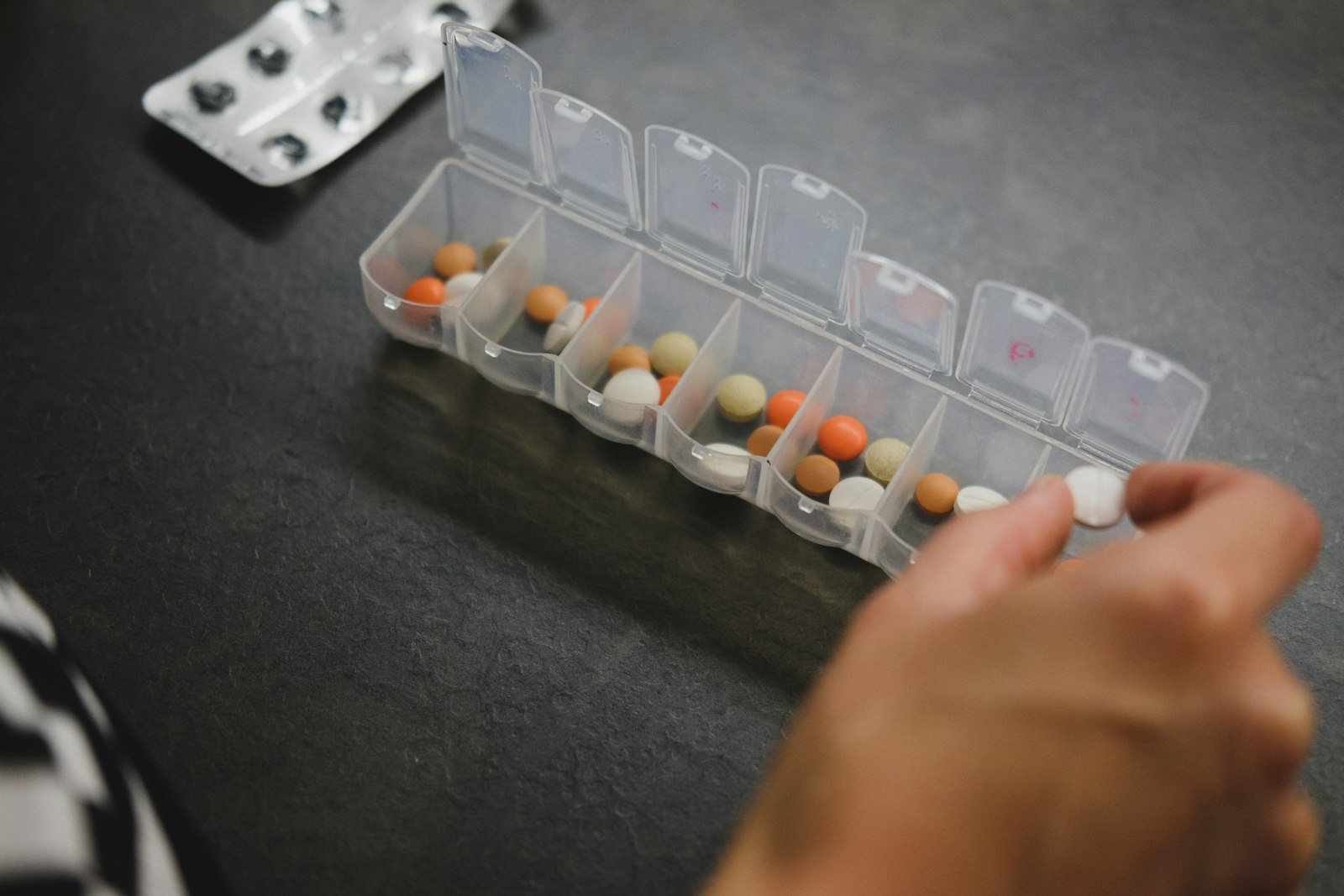
Why medication becomes the first real crisis at home
The average adult over 70 takes between four and seven prescription medications, plus a few over-the-counter supplements. Many of those have specific timing rules — with food, without food, two hours before another medication, never with grapefruit, and so on.
Studies from the AHRQ estimate that medication errors are responsible for roughly 125,000 deaths per year in the United States and a large share of hospital readmissions in adults over 65. The pattern is rarely dramatic. It is usually a quiet pattern of missed doses leading to a blood pressure spike, a heart rhythm change, or a fall that lands a parent in the ER.
An automatic pill dispenser does not fix every medication problem. What it does is reduce the daily mental load, automate the reminder, lock pills away from accidental double dosing, and — for the best models — quietly text the adult child if a dose is missed.
What an automatic pill dispenser actually does
There is a wide gap between a $20 weekly pill organizer and a $45/month subscription dispenser. The better automatic pill dispensers:
- Pre-sort up to 30+ days of medications into sealed compartments loaded monthly by family or pharmacy.
- Dispense the right pills at the right time with a visual prompt, audible alarm, and a button to release the dose.
- Lock unscheduled doses away — the single most underrated feature.
- Track adherence — every dose taken or missed is logged.
- Send alerts to caregivers if a dose is missed by 30, 60, or 90 minutes.
- Notify the family when supply is low so refills do not lapse.
The features that matter most are: locked compartments, missed-dose caregiver alerts, and a setup simple enough that the parent does not feel like they are operating equipment.
Affiliate disclosure: TechForYears may earn a commission from some links below. Recommendations are based on usefulness, safety, and fit for families, not commission size. We recommend talking to your parent’s pharmacist before purchasing any medication dispenser.
Best automatic pill dispensers for elderly parents compared
| Dispenser | Best for | Monthly cost | Caregiver alerts | Locked compartment | Wi-Fi or cellular |
|---|---|---|---|---|---|
| Hero Health | Most senior family setups | ~$35–45/mo subscription | Yes — multiple caregivers | Yes | Wi-Fi |
| MedMinder (Maya) | Homes without reliable Wi-Fi | ~$40–65/mo | Text, email, phone call | Yes (locking models) | Cellular available |
| Livi (MedaCube) | Parents on 10+ medications | Lower; higher upfront (~$1,000) | Yes | Yes | Wi-Fi |
| Budget (TabTime, e-Pill) | Forgetfulness only, no interaction risk | No subscription (~$100–200 once) | Usually none | Varies by model | None |
Hero Health
Best for: adult children who want the cleanest app experience and the most reliable missed-dose alerts. Hero holds up to a 90-day supply across 10 medication slots, sounds a chime at dose time, and dispenses through a single opening. The companion app sends adult children a notification if a dose is missed.
Friction to know: wall-plug, requires Wi-Fi; if home internet drops, the device still dispenses but caregiver notifications pause.
MedMinder
Best for: households without reliable Wi-Fi, or families who want a slightly lower-cost subscription. The “Maya” cellular model does not require home internet — which matters for parents in rural areas.
Livi by MedaCube
Best for: parents on complex regimens, often used in assisted-living settings as well as homes. Higher upfront cost (around $1,000) but lower or no monthly subscription depending on plan.
Budget tier (under $200, no subscription)
Top budget pick: LiveFine Automatic Pill Dispenser (around $80 on Amazon). 28 compartments, locking lid, up to 6 alarms per day, no monthly subscription. Best fit when you want medication discipline without recurring fees and your parent will accept a tabletop device. Tradeoff: no caregiver phone alert — you’ll need to call to confirm doses were taken.
Step-up budget pick: e-pill MedTime Station (around $130-150 on Amazon). Larger pill capacity than the LiveFine, louder alarm, and a more durable build. Best fit when a parent has 8+ medications, struggles to hear standard alarms, or has dropped a previous device. Still no caregiver phone alert — same trade-off as the LiveFine.
The TabTime Super 8, e-Pill MedSmart, and similar models offer a locked compartment and alarm without a subscription. They work for parents whose only risk is forgetting, not for parents with cognitive decline or complex interaction risk. Most do not include remote caregiver alerts.
For most families starting out, Hero is the easiest first pick because the missed-dose caregiver alert is the single feature that most reduces family anxiety. Confirm current pricing on each provider’s site before subscribing.
Hero pill dispenser alternatives (no monthly subscription)
Hero is the most recognized name, but it requires an ongoing monthly subscription — and for many families that recurring bill is the dealbreaker. If you are weighing Hero but would rather avoid a subscription, the strongest alternatives are one-time-purchase automatic dispensers you own outright. They cover the core job: scheduled doses, an audible alarm, and a locked compartment.
- No-subscription alternative: a locking countertop dispenser with multiple daily alarms, reloaded by the family each week.
- What you trade away versus Hero: the automatic text to your phone when a dose is missed. If remote caregiver alerts are essential, a subscription device is still the better fit.
Compare no-subscription pill dispensers on Amazon →
Best automatic pill dispenser for a parent with dementia
For a parent with dementia or mild cognitive impairment, the requirements shift. The dispenser is not just a reminder — it is a barrier against accidental overdose. The features that matter most:
- A fully locked compartment that releases only the scheduled dose.
- A loud, repeating alert that cannot easily be silenced and forgotten.
- Caregiver alerts within 30 minutes of a missed dose, sent to more than one family member.
- Tamper resistance so the parent cannot open the device when frustrated.
- A single dispensing slot so the parent does not have to choose between compartments.
Hero, MedMinder (locking models), and Livi all meet these requirements. Open weekly trays should be avoided once a parent has been formally diagnosed with cognitive decline. Pair the dispenser with a Power of Attorney for healthcare so a family member can update the medication list with the pharmacy when prescriptions change.
How to set up caregiver alerts so you are not calling at 9 PM
The point of an automatic pill dispenser for most adult children is not the dispenser itself. It is the calm of knowing that if a dose is missed, you find out without having to call. The setup that works best:
- Install the caregiver app on at least two phones. Adult child plus a sibling or partner.
- Set the missed-dose alert to 30 minutes. Not 60 or 90 — too long for heart medication or insulin.
- Set low-supply alerts at the 7-day mark. Avoids weekend and holiday refill gaps.
- Quiet hours, but not too quiet. Keep critical missed-dose alerts always on.
- Test the alert. Let one dose go past the window intentionally on day one and confirm the notification arrives.
A calmer setup plan in six steps
Step 1: Make the medication list with the doctor or pharmacist
Print the current medication list with doses, timing, and refill dates. Most family medication crises trace back to an outdated list.
Step 2: Confirm the parent agrees
Frame it as “this means you don’t have to think about it every morning” rather than “you are forgetting things.”
Step 3: Choose the right device
Hero for most families. MedMinder for spotty Wi-Fi. Livi for complex regimens. Budget tier for forgetfulness without medication-interaction risk.
Step 4: Load the device with the pharmacist’s help
For the first month, ask the pharmacist to walk through the loading process or to provide a pre-sorted monthly blister pack.
Step 5: Set up caregiver alerts on two phones
Per the previous section.
Step 6: Plan the monthly refill rhythm
Pick a recurring day. The first Sunday of the month works for most families.
Mistakes to avoid
- Buying the cheapest open-tray organizer for a parent with any cognitive decline.
- Setting up the device but not the caregiver alerts.
- Single-caregiver setup that fails when that one person travels.
- Skipping the conversation and surprising the parent with a new appliance.
- Loading the device from open prescription bottles without confirming the current list.
- Forgetting that the dispenser still needs to be reloaded — automation is not refilling.
What an automatic pill dispenser will not solve
A dispenser cannot stop a parent from refusing medication, cannot manage liquid medications, cannot administer inhalers or injectables, and cannot replace a conversation with the prescribing doctor about whether the regimen itself is too complex. For parents on more than 10 medications, ask the doctor or pharmacist for a medication review — sometimes the right answer is fewer prescriptions, not better dispensing.
Bottom line
For most families helping a parent age at home, an automatic pill dispenser like Hero Health is one of the highest-value pieces of caregiving infrastructure you can put in place. Pair it with a clean medication list, caregiver alerts on at least two phones, and a monthly refill rhythm. That combination costs less than $50 a month and replaces a significant share of the daily anxiety that drives families to assisted living conversations earlier than they need to.
Next step
Print the family checklist. Keep one copy in your parent’s kitchen drawer and one in your home file.
FAQ
What is the best automatic pill dispenser for an elderly parent in 2026?
For most families, Hero Health is the best first pick because of the locked compartment, caregiver app, and reliable missed-dose alerts. MedMinder is the best pick when home Wi-Fi is unreliable. Livi by MedaCube is the best pick for parents on 10+ medications.
How much does an automatic pill dispenser cost per month?
Subscription dispensers (Hero, MedMinder) typically cost $35–65 per month. Higher-capacity dispensers like Livi have a higher upfront cost (around $1,000) with lower or no monthly subscription. Budget dispensers under $200 have no monthly cost but no caregiver alerts.
Is Hero pill dispenser worth it?
For families managing a parent’s medications from a distance, the missed-dose caregiver alert alone usually justifies the monthly cost. For parents with simple regimens and no cognitive decline, a budget dispenser may be enough.
What is the best pill dispenser for dementia patients?
A pill dispenser for dementia should have a fully locked compartment, a loud repeating alert, caregiver notifications within 30 minutes of a missed dose, and tamper resistance. Hero, MedMinder (locking models), and Livi meet these requirements.
Can an automatic pill dispenser send alerts to my phone if my parent misses a dose?
Yes — Hero, MedMinder, and Livi all support caregiver app notifications. Set the alert window to 30 minutes for safety-critical medications. Install the app on at least two family members’ phones.
Does Medicare cover automatic pill dispensers?
In most cases, no — automatic pill dispensers are generally not covered by traditional Medicare. Some Medicare Advantage plans include them as a supplemental benefit, and some long-term care insurance policies will reimburse part of the cost. Check the parent’s specific plan.
What is the cheapest automatic pill dispenser that still alerts a caregiver?
The lowest-cost automatic pill dispensers with caregiver alerts are typically the entry-tier subscription models (around $35/month). Most one-time-purchase budget dispensers under $200 do not include remote caregiver notifications.
Related: A pill dispenser handles one half of in-home safety. For the other half, see our guide to AI fall detection for seniors — what actually catches a fall, and what to do when your parent says they will not wear it.
Related guide: For aging parents whose biggest daily challenge is loneliness or isolation rather than medication, see our guide to AI companions for elderly parents — comparing ElliQ, Echo Show, GrandPad, and more.